Own project: D2C fashion label, Netherlands · 2026
Headless store with 0.8 s LCP and +28% conversion
Same products, same ads, only the store got fast.
Results
- 0.8 sLCP on mobile (was 3.1 s)
- +28%conversion at the same ad budget
- 100Lighthouse performance score
- +34%organic sessions after 4 months
The story
The story behind Headless store with 0.8 s LCP and +28% conversion
Our in-house D2C fashion label ran on a standard Shopify theme with 14 apps and an LCP of 3.1 seconds. RABZI rebuilt the store as a headless storefront on Hydrogen with Sanity as the CMS. Same catalog, same ad budget: LCP 0.8 seconds, Lighthouse 100 and 28% higher conversion.
The challenge
The label had sold through a standard Shopify theme for 3 years. Every new wish became an app: reviews, bundles, size advice, pop-ups, pixels. 14 apps later, the product page loaded in 3.1 seconds on mobile (LCP), Lighthouse scored 41, and organic visibility slid a little further every quarter. Ad costs went up; conversion did not.
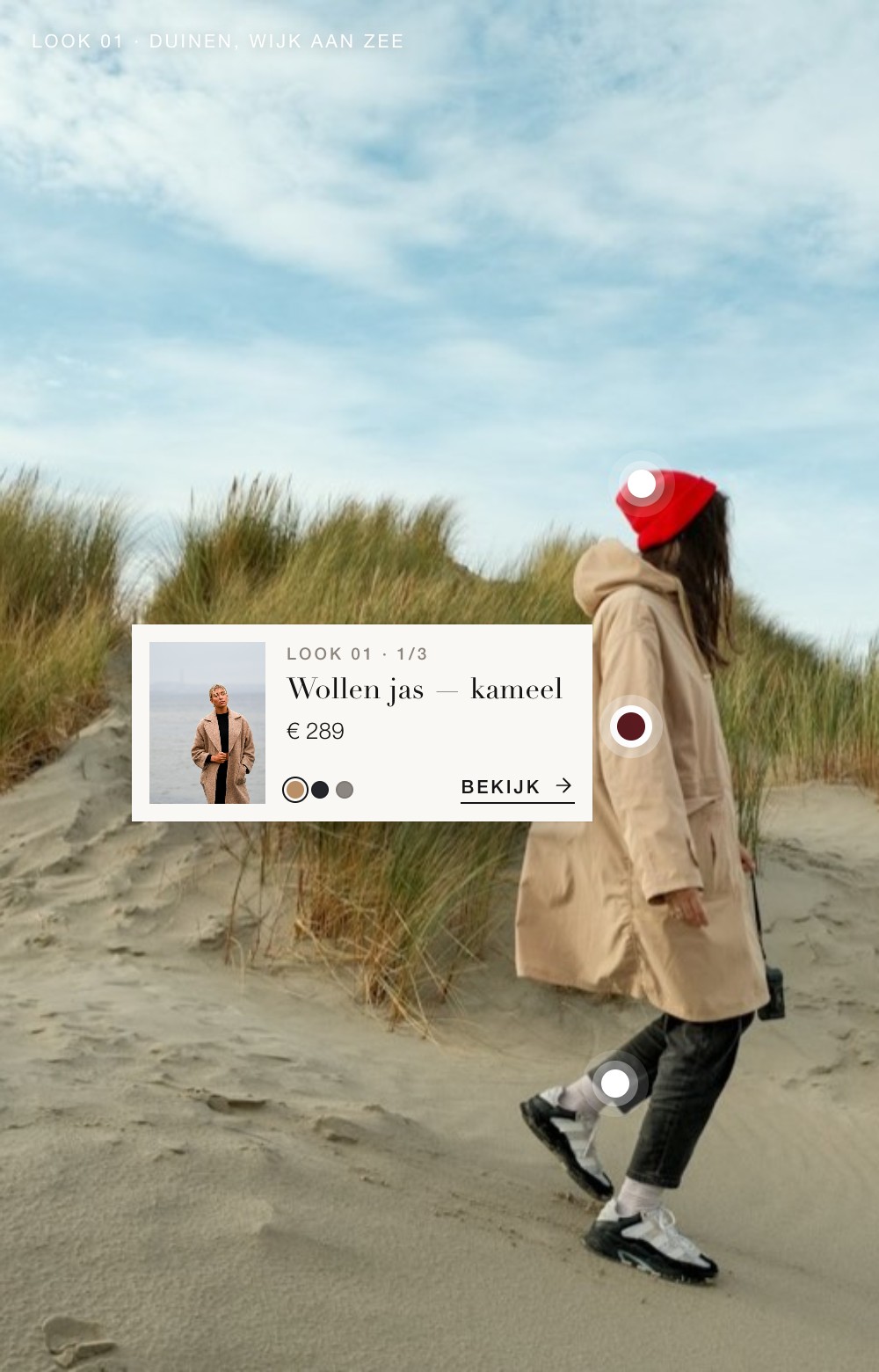
Because it is our own label, we knew the numbers exactly and could make hard calls without stakeholder rounds. The question was not whether the store could be faster, but whether a headless setup pays for itself for a label with 400 SKUs and 2 collections a year. We decided to measure it rather than estimate it.
Our approach
We kept Shopify as the backend for products, inventory, checkout and payments, and built the storefront in Hydrogen on the Storefront API. Content (lookbooks, size guides, collection stories) moved to Sanity so marketing can publish without a deploy. Hosting on Cloudflare with edge caching per country.
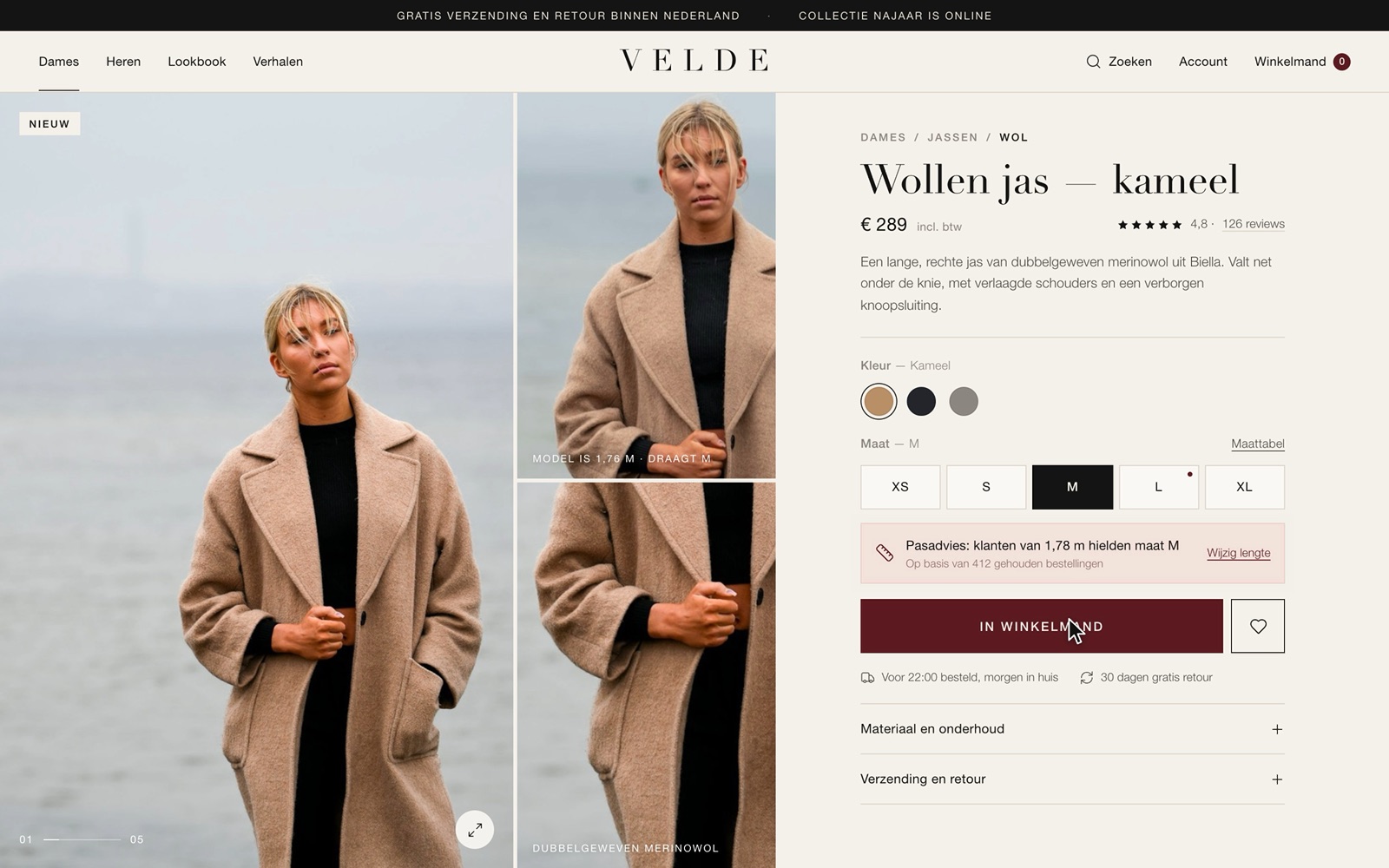
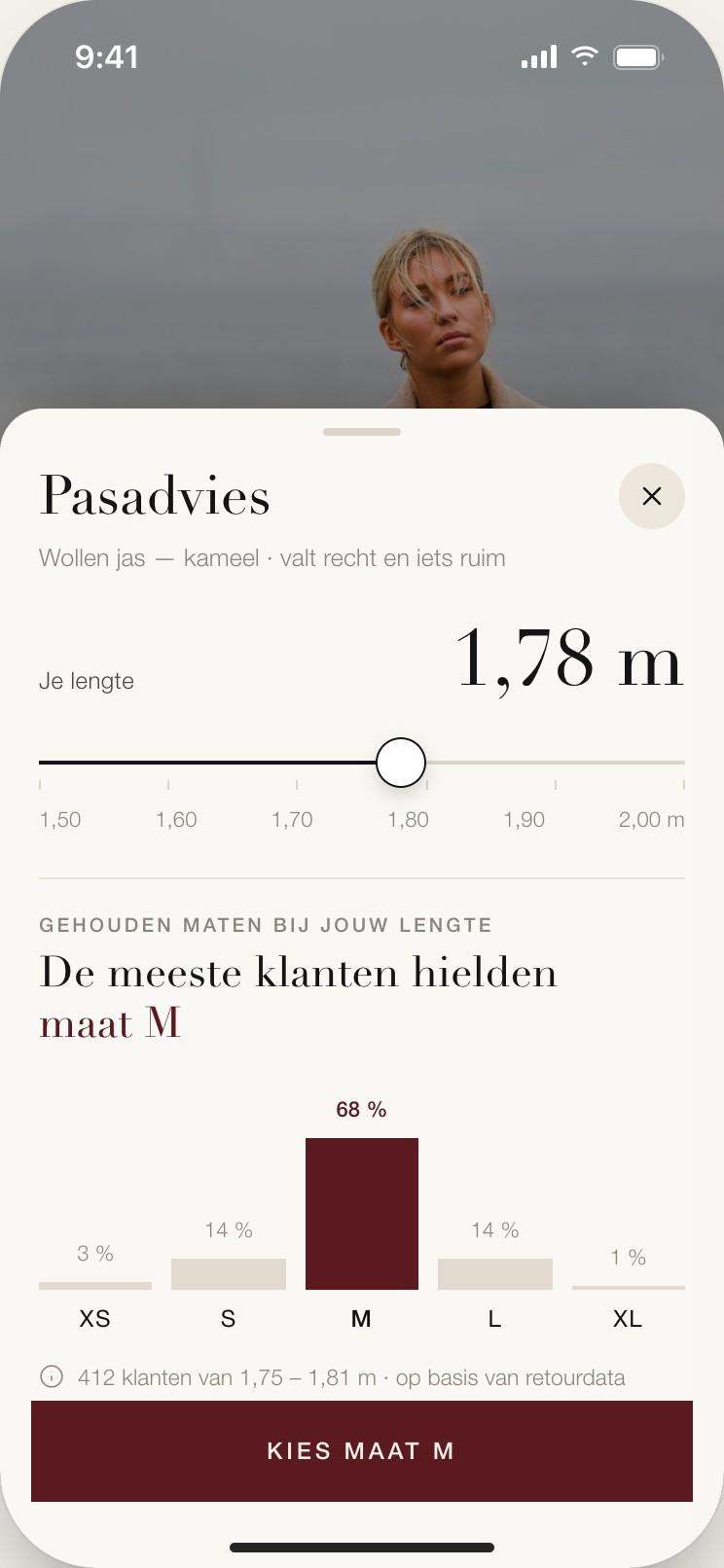
Of the 14 apps, 3 survived, as API integrations instead of scripts on the page: Klaviyo for email and flows, Sendcloud for shipping and returns, and server-side GTM for measurement with Consent Mode v2. Reviews, bundles and size advice we built ourselves. That cost 2 extra weeks and saves licenses and 900 kilobytes of JavaScript every month.
The migration ran for 9 weeks alongside the existing store. In week 8 an A/B test sent 50% of traffic to the new storefront: same products, prices and campaigns. Only when the conversion gap had held steady for 3 weeks did we switch to 100% and delete the theme.
The solution
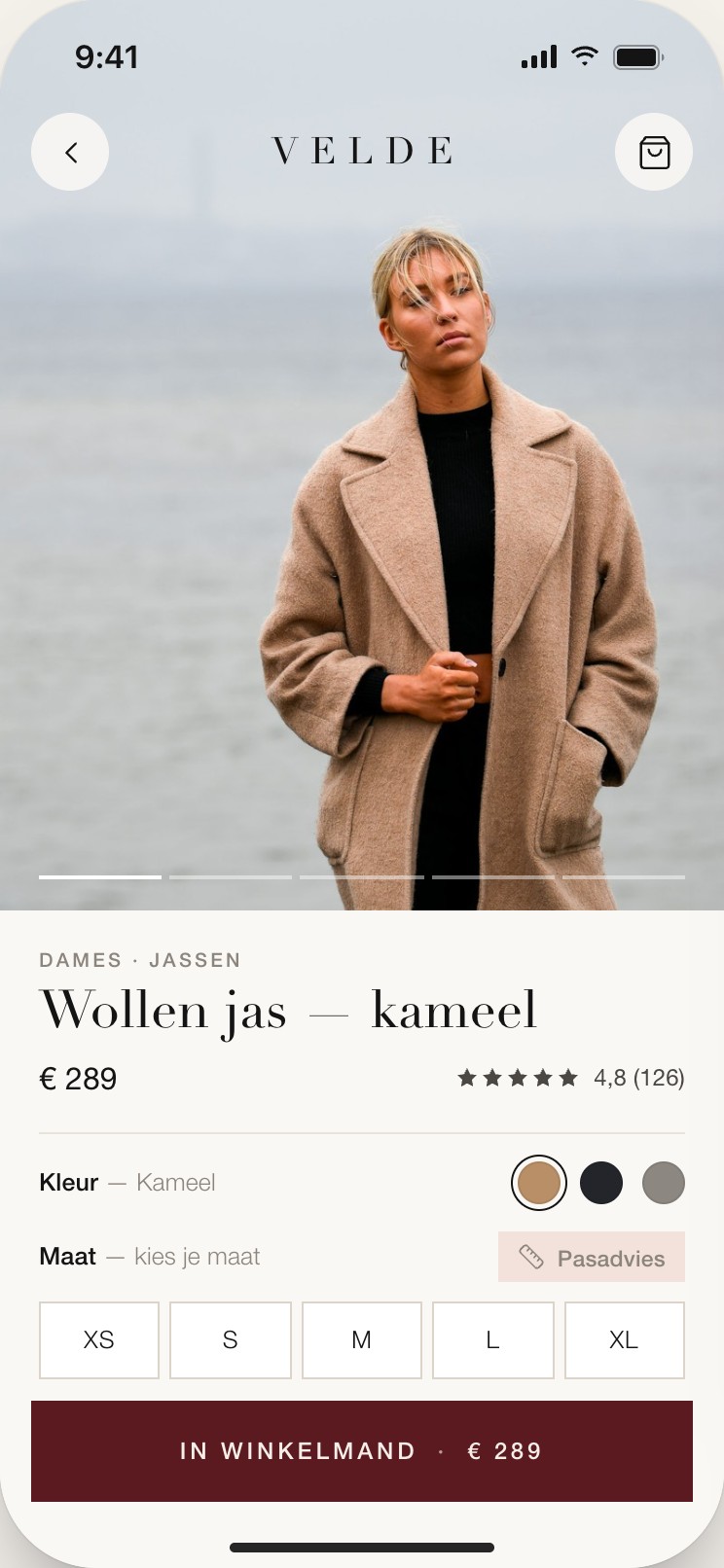
The new store loads the product page in 0.8 seconds on an average phone, with AVIF images, color and size selection without a reload, and a checkout that Shopify continues to handle. Size advice uses the label's own returns data: per product it shows which size customers of the same height kept.
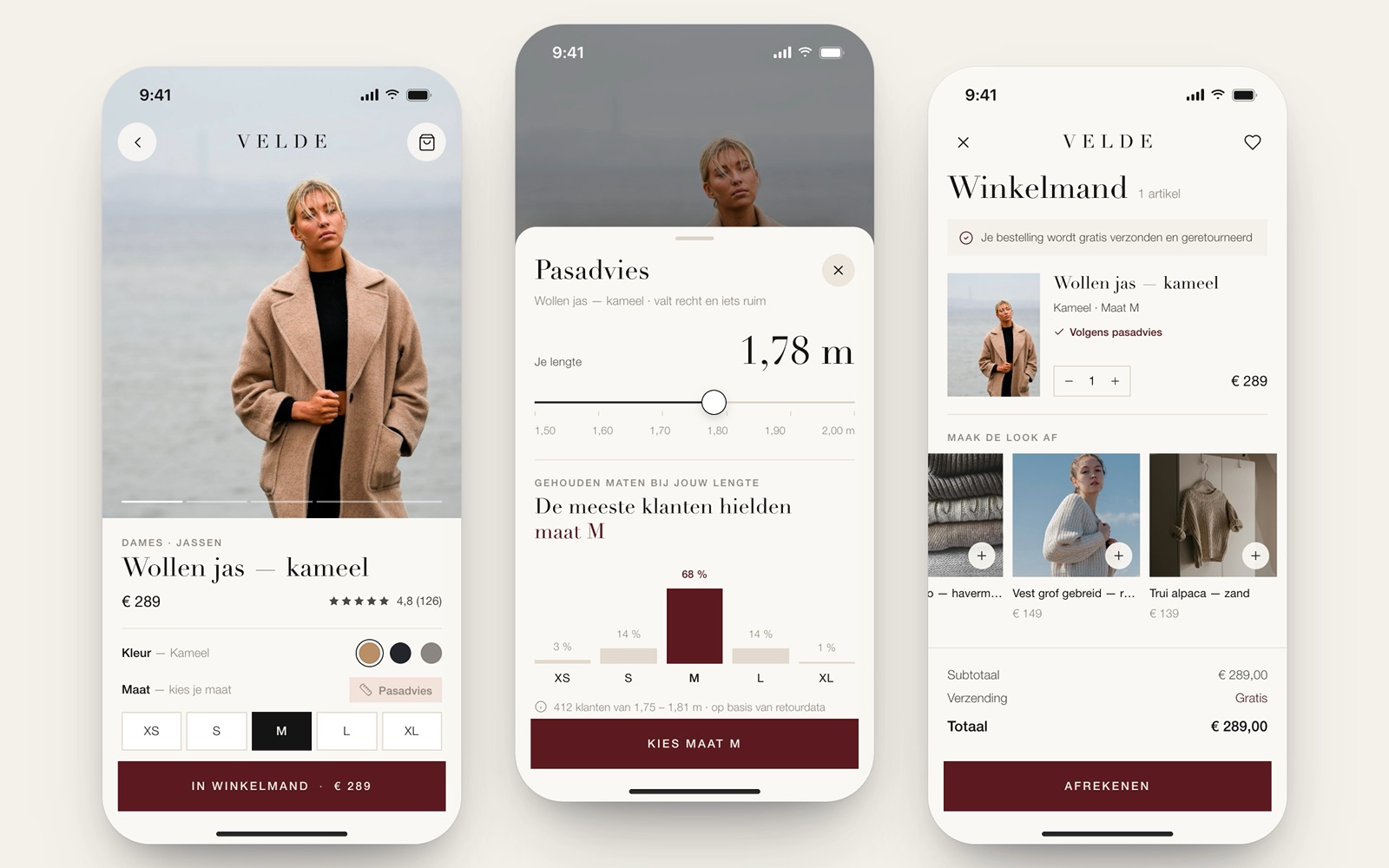
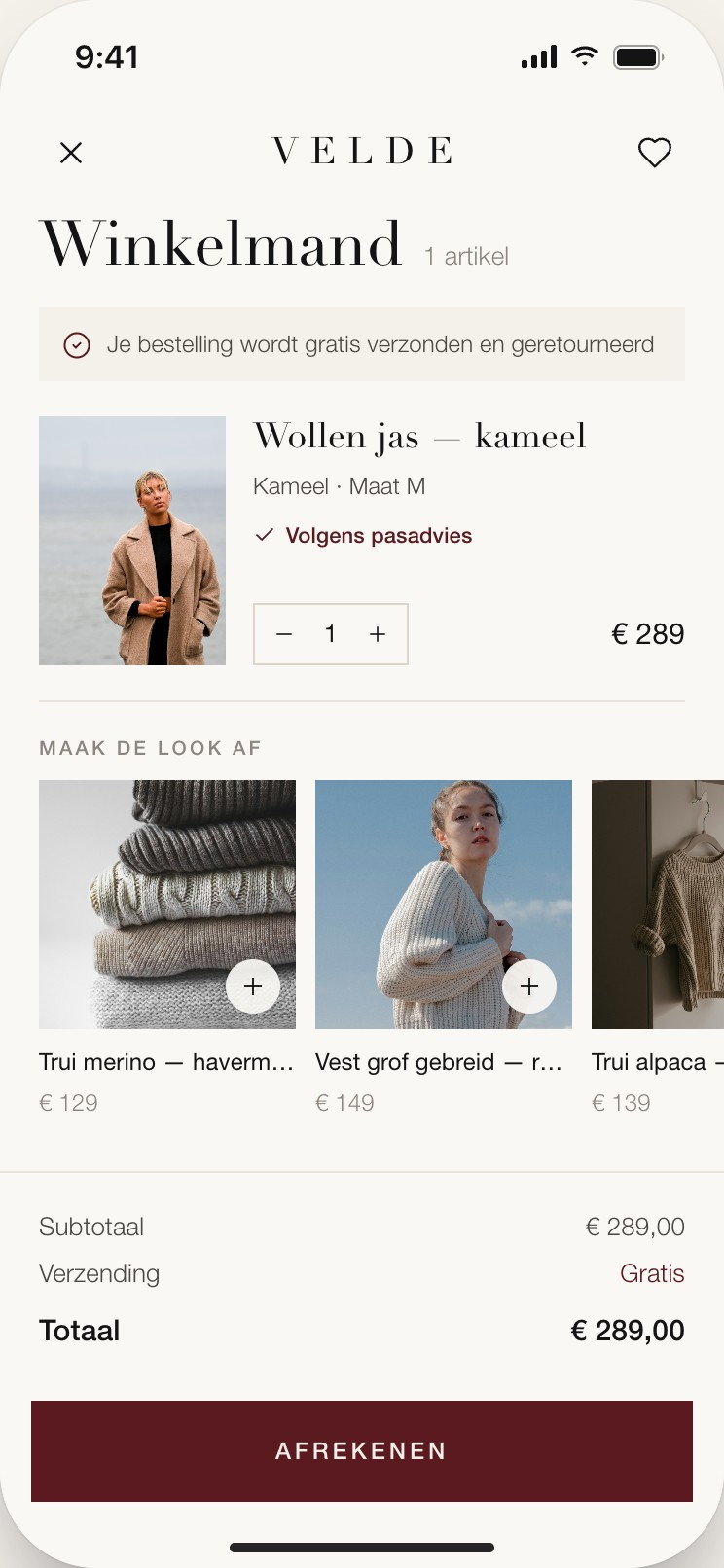
For SEO, every category received its own copy block and structured data from Sanity, and 1,800 duplicate URLs from the old theme disappeared. Speed plus clean indexing delivered 34% more organic sessions within 4 months, on top of the higher conversion.
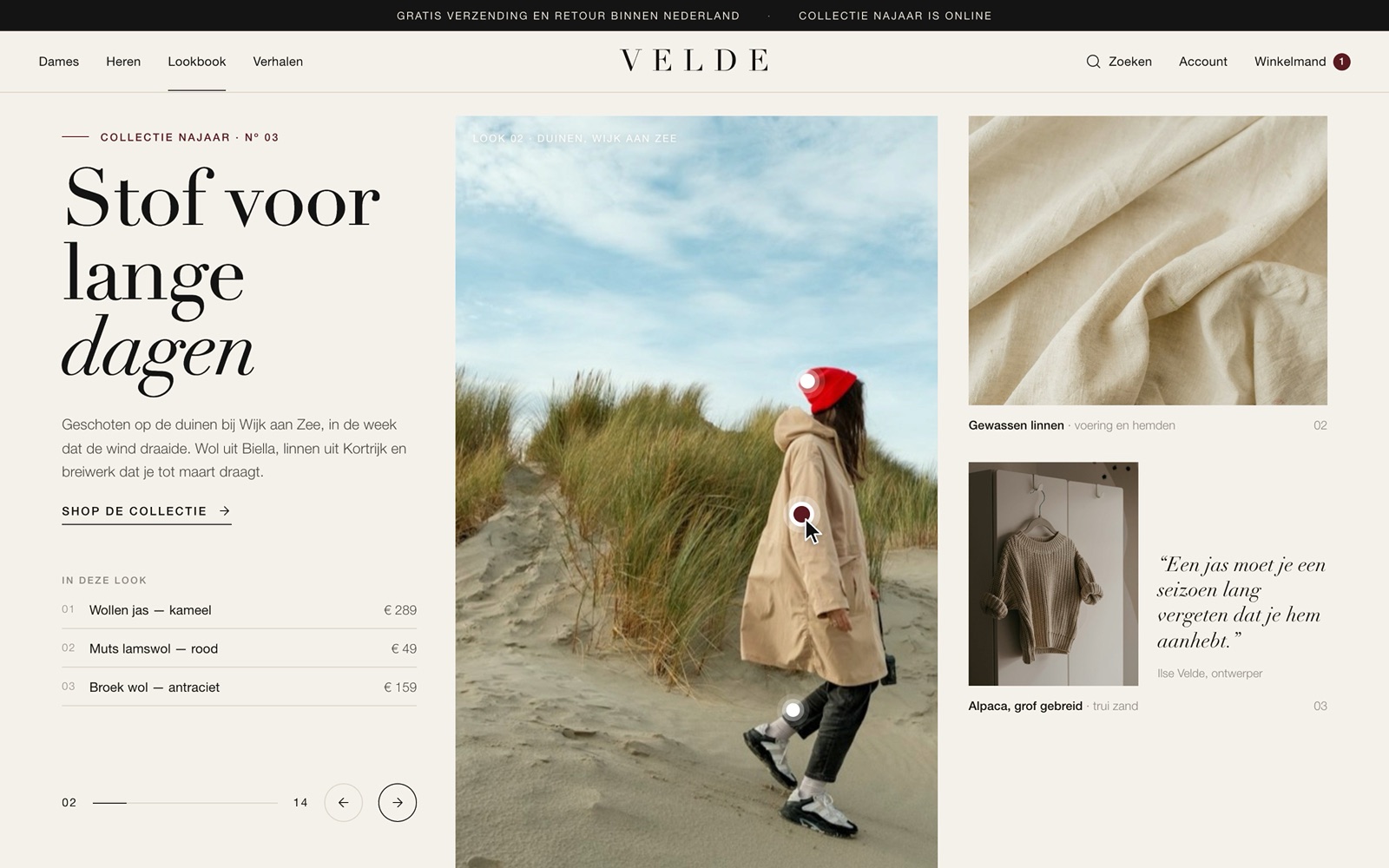 Watch it in action0:22 · 3 scenes
Project facts
About this project
- Client
- D2C fashion label, Netherlands
- Industry
- Retail & e-commerce
- Year
- 2026
Delivered
- Headless storefront on Hydrogen
- Sanity CMS with lookbooks and size guides
- In-house review and bundle module
- Size advice based on returns data
- Klaviyo and Sendcloud integration
- Server-side tagging with Consent Mode v2
- SEO migration with redirects
- Lighthouse CI in the pipeline
Technology
- Shopify (Storefront API)
- Hydrogen
- Sanity
- Cloudflare
- Klaviyo
- Sendcloud
- Server-side GTM
- Lighthouse CI
RABZI’s own project: built, measured and run by us. Figures are measured values.
More work
More work
-
Web applications & platforms Transport company, Rotterdam
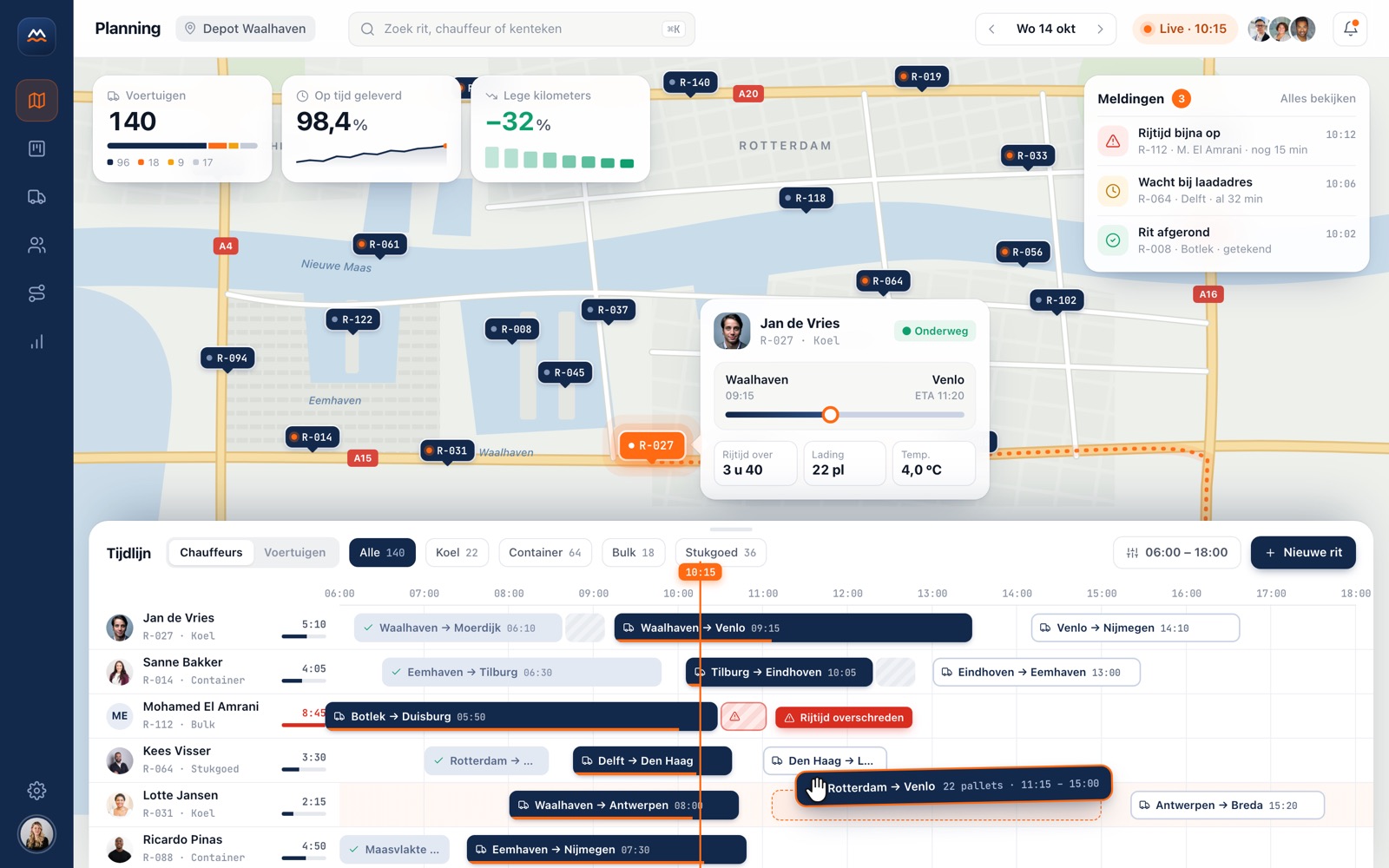
Real-time planning platform for 140 vehicles
−32% empty kilometers -
Web applications & platforms Restaurant group (6 locations), Utrecht
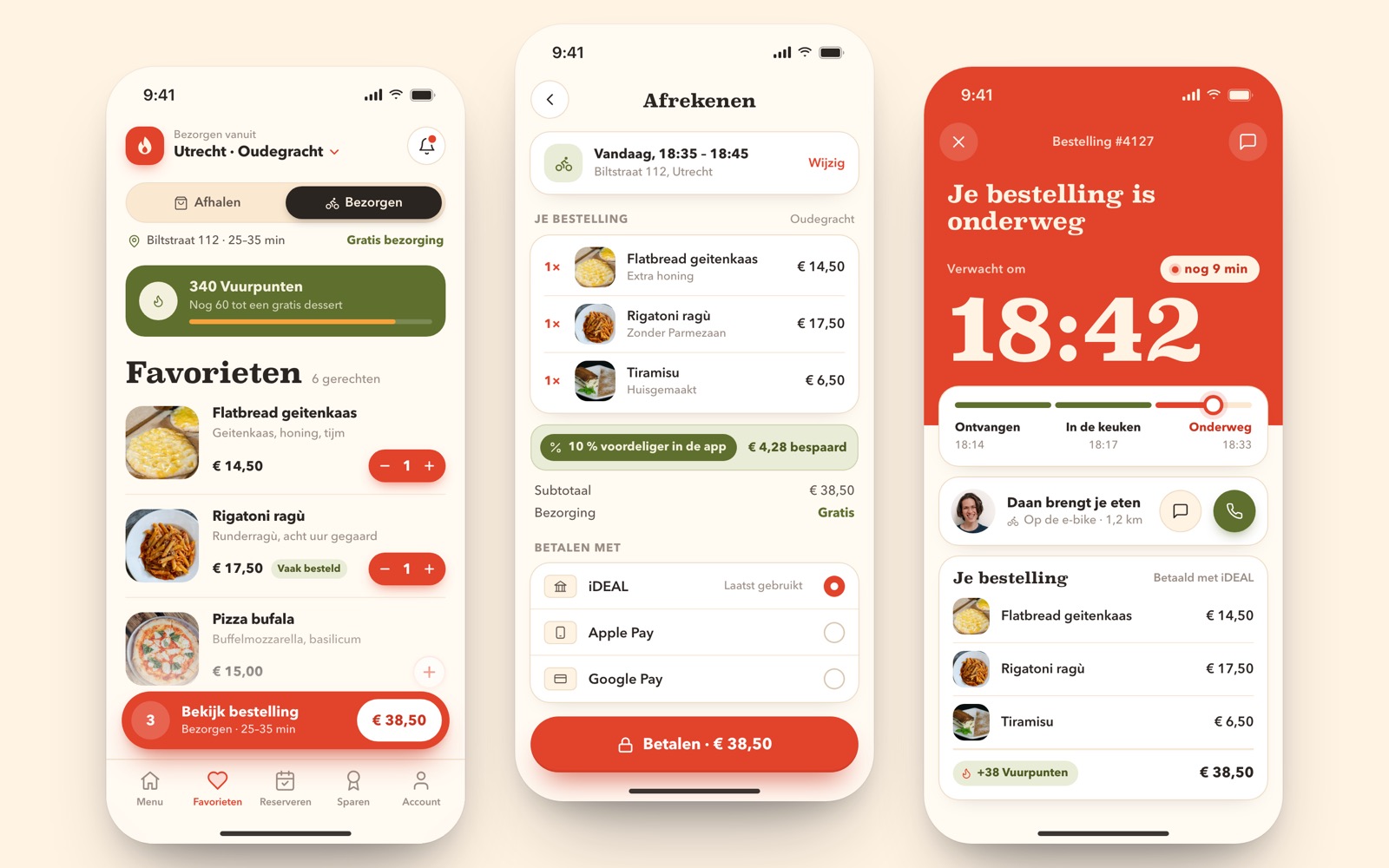
Commission-free ordering and reservation platform
0% commission on owned orders -
Mobile apps Installation company (35 technicians), Brabant
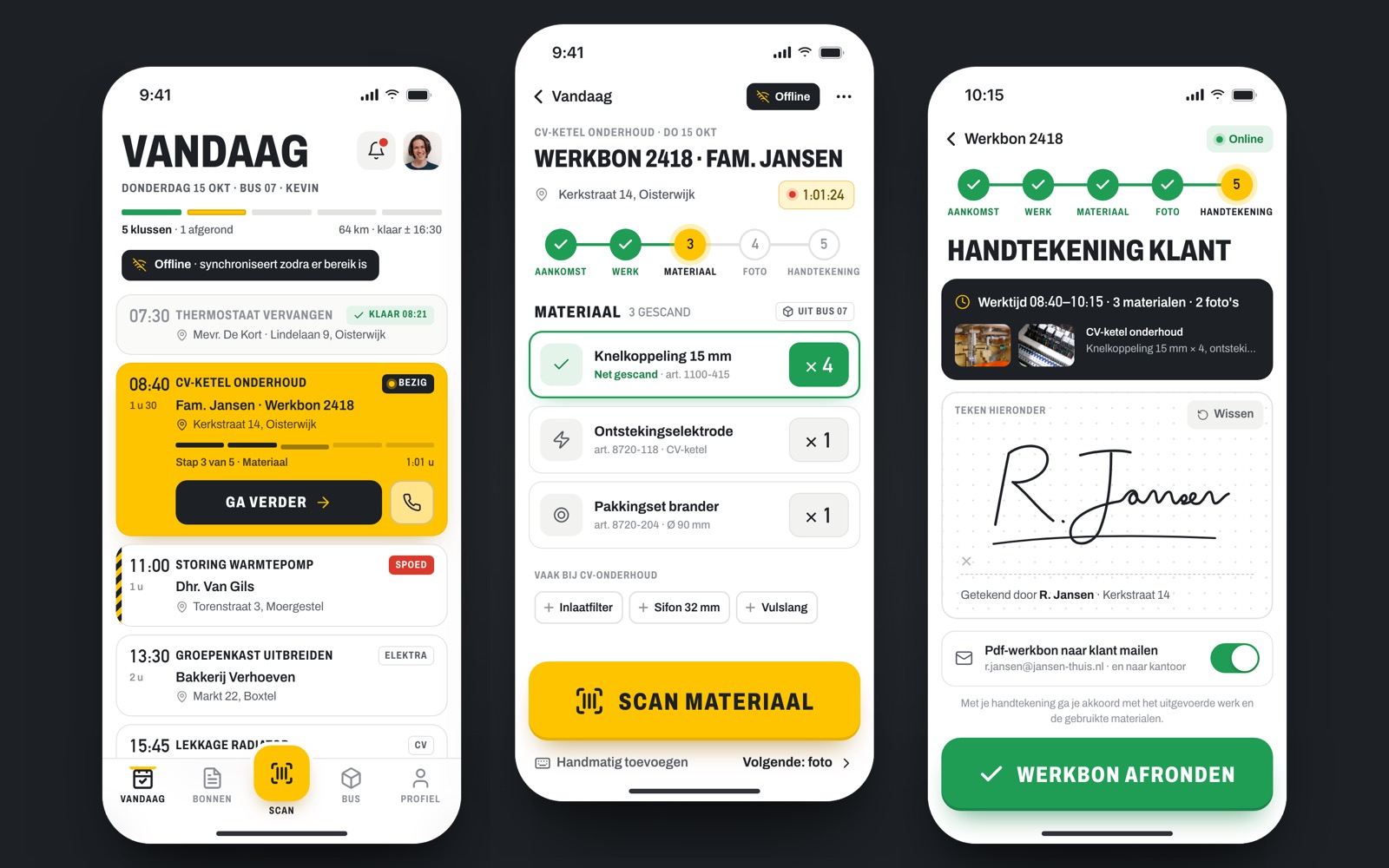
Work-order and planning app connected to Exact
−6 h paperwork per technician per week
Let’s build something.
Tell us about your project. You will hear back within one business day and receive a concrete proposal within a week.